1.74 Million: Tesla’s FSD Count Hinges on a Pay Package Clause
Tesla claims a 67% surge in Full Self-Driving users, but a significant portion of the total consists of one-time buyers included to match executive compensation criteria.
By William Parker ·
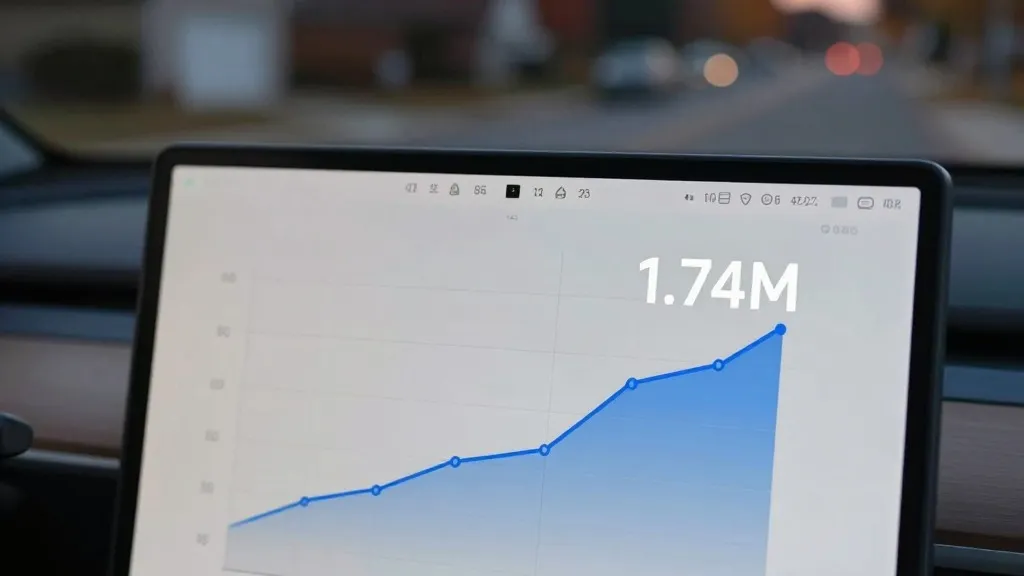
Tesla has officially reached 1.74 million active Full Self-Driving subscriptions, a figure the company highlights in its latest shareholder letter. This total represents a 67% increase over the previous year, yet the definition of an 'active subscription' relies on a specific accounting method tied directly to the 2025 CEO Performance Award. Under this framework, the metric encompasses both customers paying monthly fees and those who purchased the software upfront, a distinction that significantly inflates the headline number for investors and analysts.
The financial implications of this counting method are substantial. For every one of these 1.74 million owners to be classified as a subscriber, the vehicle must remain active, regardless of whether the driver pays $99 monthly or paid as much as $15,000 years ago. Tesla ceased selling FSD as a one-time purchase on February 14, 2026, shifting all new customers to the monthly model. However, the company has not disclosed how many of the current 1.74 million are actually contributing to recurring revenue versus those who bought the software outright before the policy change. The only exclusion from the count is free trials, leaving a gap in understanding the true size of the paying monthly base.
This ambiguity extends to other key performance indicators in the Q3 2026 report. Tesla’s cumulative delivery figure, now standing at 10.2 million, also incorporates unsupervised Robotaxis placed into commercial operation. This specific inclusion aligns with the operational milestone of 20 million vehicles required for Elon Musk’s compensation package. By mirroring the pay plan’s definitions, the company ensures that its reported growth metrics directly correlate with the thresholds needed for executive vesting, rather than solely reflecting standard market adoption trends.
The people at the center of this accounting strategy include the Tesla board, which established the definition, and Elon Musk, whose 2025 award consists of 12 tranches. Each tranche requires both a market cap milestone and an operational achievement, such as 10 million active FSD subscriptions or 1 million Optimus robots. As of June 30, Tesla considered only the 20 million delivery milestone probable. The 75% attach rate for new North American deliveries in Q3, which the company claims is driving demand, further complicates the picture. Tesla does not define whether this rate includes introductory offers or if those customers continue to pay after the initial period, making it difficult for observers to gauge long-term retention.
The stakes for the company involve both financial credibility and the timeline for executive compensation. Tesla added 260,000 net FSD subscriptions in Q3, its highest quarterly gain to date. At this pace, reaching the 10 million subscription target would take approximately eight years. If the company reverts to the average growth rate of the last 12 months, which was roughly 700,000 new subscriptions annually, the timeline extends to nearly 12 years. The compensation award runs until 2035, meaning the gap between the current 1.74 million and the 10 million goal remains a significant hurdle that relies heavily on the continued inclusion of upfront buyers in the active count.
For readers in the Great Lakes and Ohio Valley, where EV adoption is steady, the distinction between a one-time purchase and a subscription affects how much weight to place on Tesla’s reported momentum. While counting upfront buyers is not technically incorrect, presenting the total as a pure subscription metric obscures the revenue model. Until Tesla clarifies how many of the 1.74 million users are paying the $99 monthly fee, the 67% growth figure remains a hybrid of legacy ownership and new recurring revenue, a nuance that may influence how stakeholders assess the company’s trajectory toward its 2035 goals.
Source: Electrek