Federal Lighting Standards: The Push for Cyan Signals
Regulators propose a uniform blue-green light requirement to help identify autonomous vehicles on public roads.
By Zanele Khumalo ·
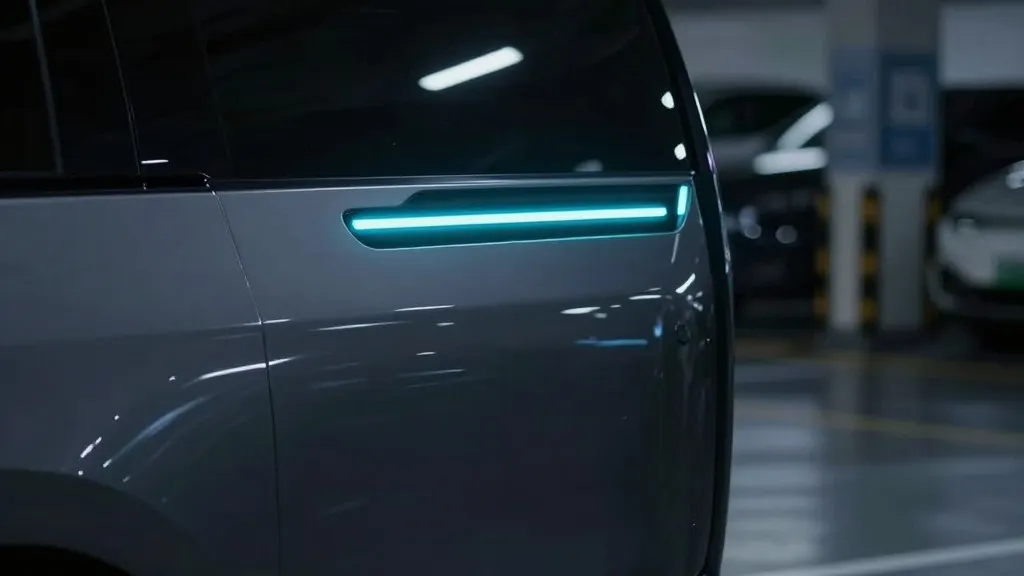
The National Highway Traffic Safety Administration has formally proposed a standardized visual signal for driverless vehicles, specifying the use of cyan-colored marker lamps to indicate active automated driving systems. This regulatory move aims to resolve long-standing debates over how robotaxis should communicate their operational status to other road users and law enforcement. By establishing a distinct blue-green light, the agency seeks to create a consistent national standard that reduces confusion and enhances safety in mixed traffic environments.
The rationale behind selecting cyan is rooted in the existing automotive lighting palette. Current industry standards rely on red for brakes, amber for turn signals, and white for headlights. Flashing blue and red lights are reserved for emergency services. Introducing a new color fills a visual gap without overlapping with established signals. While Mercedes-Benz previously received state-level approval for turquoise lights on its Level 3 Drive Pilot vehicles, it later abandoned that specific implementation. NHTSA now aims to set a federal baseline that operators like Waymo, Nuro, and Zoox, along with manufacturers such as GM and Mercedes, can adopt uniformly across the country.
Under the proposed revisions to Federal Motor Vehicle Safety Standard No. 108, these cyan marker lights would remain optional for manufacturers. However, the proposal dictates specific requirements for color, brightness, and placement. This standardization ensures that if an automaker chooses to install the lights, the configuration is legally compliant and consistent. The goal is to prevent a fragmented market where different companies use varying colors and intensities, which could confuse drivers and pedestrians regarding the status of the vehicle.
The regulatory update also includes significant administrative streamlining for autonomous vehicle design. NHTSA proposes removing requirements for physical controls that are irrelevant in a driverless context, such as manual hazard switches, beam shifters, and turn signal levers. Additionally, the agency plans to update the 12.8-volt testing standard to accommodate modern LED architectures. These changes reduce bureaucratic hurdles for automakers building vehicles without traditional human interface components. The agency is also reconsidering rules regarding the vertical placement of high-beam versus low-beam lights.
This initiative is part of a broader Department of Transportation strategy to facilitate the deployment of autonomous vehicles. By relaxing rules for traditional controls like steering wheels and pedals, the government aims to accelerate the commercialization of driverless technology. The shift reflects a growing recognition that current safety standards were designed for human-operated cars and may not fully apply to automated systems.
Despite the push for streamlined regulations, existing rules remain strictly enforced during the transition period. Last month, NHTSA launched an audit query into the Tesla Cybercab to review the technical data used for its certification. The investigation focuses on the absence of design features such as sideview mirrors, pedals, and a steering wheel, which are currently required under FMVSS. This dual approach highlights the tension between modernizing standards for future vehicles and maintaining rigorous oversight of current market entrants.
The proposed rule marks a pivotal step in defining the visual language of autonomous transportation. For the Great Lakes and Ohio Valley regions, where major automotive and logistics hubs are located, this standardization could influence how local fleets are designed and regulated. As the industry moves toward a future with fewer human drivers, clear and consistent signaling becomes a critical component of market confidence and operational efficiency.
Source: The Verge