SpaceX Turns Down US Space Force Launch Contracts
The aerospace company declined three military launch assignments offered by the US Space Force, while other firms in the sector advanced their own rocket programs.
By Xiaoyu Wang ·
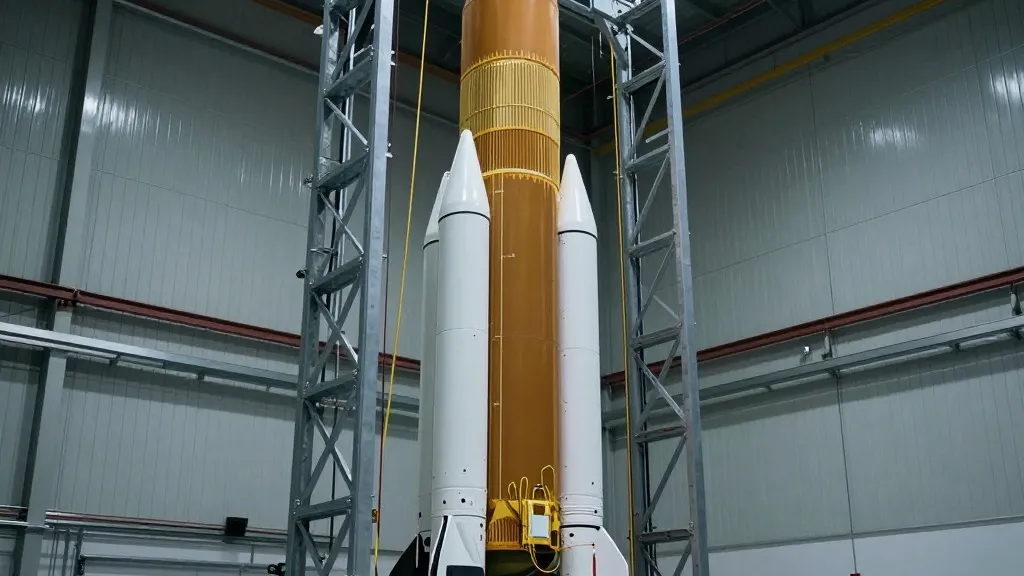
SpaceX declined an offer from the US Space Force for three military launch contracts, a decision that caught the defense market by surprise. The refusal on Thursday removes the company's Falcon rockets from a set of assignments that would have supported national security missions. The company did not provide a public explanation for turning down the work. The Space Force had put the contracts in front of SpaceX as part of its ongoing procurement process for launch services. The agency relies on a roster of providers to place satellites and other payloads into orbit for the Department of Defense. SpaceX is a major supplier in that market, and the company's Falcon 9 and Falcon Heavy rockets have flown numerous missions under prior government contracts. The company's decision to step away from these three assignments leaves the Space Force to look elsewhere for the launch capacity it needs.
On the civilian side of the business, a NASA safety panel issued a separate finding involving SpaceX. The panel said the company's Starship vehicle may require as many as 22 refueling flights to support a lunar landing mission. Each of those flights would need to transfer propellant in orbit before the lander could proceed to the Moon's surface. The requirement would add a significant number of flights to the mission plan and extend the time needed to prepare for a crewed landing. Starship is the large vehicle SpaceX is building to carry astronauts to the lunar surface under NASA's Artemis program. The refueling sequence is a critical step in that architecture, and the number of flights involved has been a subject of engineering analysis. The panel's assessment addresses the operational steps needed to move the vehicle's propellant into orbit for the flight to the Moon. The plan for in-space refueling is central to the mission profile, and any change in the count of flights would affect the schedule.
Other companies in the launch sector are moving forward on their own hardware. PLD Space, a Spanish firm, said its Miura 5 rocket is nearing final integration for a first flight. The company has built three of the small-lift vehicles, and CEO Raúl Torres said the production run has kept teams working across different stages of the process. One second stage of the rocket is now fully integrated and has been shipped to a test facility in Teruel for a qualification campaign. That campaign includes a wet dress rehearsal and a static hot-fire test. PLD Space is targeting a first flight of the Miura 5 before mid-2027. The company has not set a date for the launch.
Reaction Dynamics, a Canadian startup, is seeking to raise $350 million to expand its workforce. The company plans to grow its staff from 68 to more than 350 people with the funding. Reaction Dynamics is developing the Aurora, a small-lift rocket that it hopes to place in orbit in 2028. The company also announced plans for a medium-lift vehicle called Borealis, with a debut targeted for 2031. The fundraising effort would support the development of both vehicles and the hiring needed to build them. The company is one of three prominent Canadian launch startups working to enter the market. The capital raise would give the firm the resources to move forward on its production plans and staffing needs.
The developments this week touch on the core financial questions for the launch business. Contract awards and the decision to decline them directly affect a company's revenue outlook, and the costs of preparing for a mission are tied to the number of flights it requires. SpaceX's refusal to take on the military work means the company will not book the revenue from those launches, and the Space Force must now seek other providers for that capacity. The refueling requirement for a lunar mission raises the cost and time for each flight in the sequence. PLD Space and Reaction Dynamics are both working to reach the launch pad, and the funds and hardware they are assembling are steps toward entering a market where the price of access to orbit remains a central question for customers.
Source: Ars Technica